

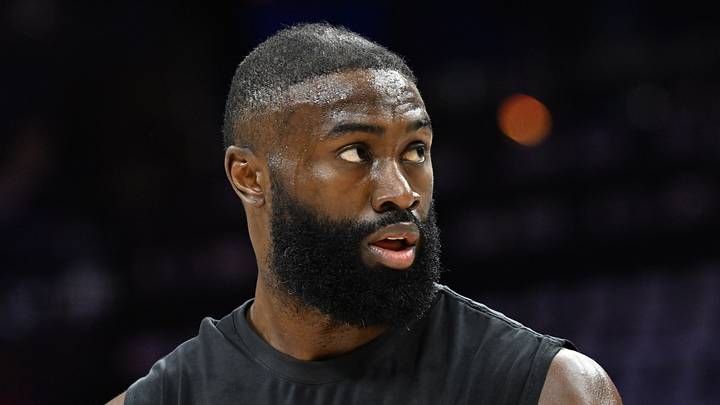
It certainly seems apparent that the Boston Celtics were determined to move on from Jaylen Brown this summer. The reasons for that are multiple. Analytics surely informed their decision. As did a punitive and parity-promoting collective bargaining agreement. Why make this deal now? To go through with this head-scratching trade, they had to believe time was not on their side.
The reason this author points to is an unwillingness to give the former Finals MVP a contract extension later this month. Before this blockbuster agreement with the Philadelphia 76ers, Brown was set to become eligible for one on Jul. 26. Now, he must wait six months from when this transaction gets finalized. At that point, the Sixers can add two years and $139 million onto the $183 million remaining on his deal.
Reporting for NBA Today on Jaylen Brown post-76ers trade -- and a major Philadelphia signing as the roster's retooling continues: pic.twitter.com/EPshQbyxnx
— Shams Charania (@ShamsCharania) July 2, 2026
The Celtics already didn't have the leverage in these trade negotiations. Their stance on giving him that extension further diminished the quality of the offers they were canvassing the league for. The clock was ticking, with urgency strictly on their side. The idea of Jul. 26 arriving, without a resolution, must've felt like a nightmare scenario to them.
Why didn't the Celtics trade for Giannis Antetokounmpo?
With Boston ready for a divorce, why not meet the Milwaukee Bucks' demands to close a deal for Giannis Antetokounmpo?
Instead, they held firm, keeping emerging talents like rookie Hugo Gonzalez out of an offer that featured Brown and a pair of first-round picks.
From this vantage point, the Bucks' trying to build around Brown didn't make sense. If it did, their franchise star would not have wanted out. However, according to Bill Simmons, Milwaukee was prepared to accept the Celtics' offer, even without getting more in the deal.
"They were talking about extensions with the Celtics, and it came down to, it was like two years, 30 percent of the cap could be the extension, or three years, 35 [percent]," said Simmons on his eponymously named podcast. "The Celtics were pretty entrenched at two for 30, and Giannis wanted the three for 35, and they couldn't agree on it, and that was when he green-lit the Miami trade."
Boston is trying to figure out how to maximize Jayson Tatum's prime. If the organization was willing to make this deal, with Antetokounmpo's extension worth 30 percent of the cap over two years, why was three for 35 percent untenable?
That's puzzling, and this is coming from someone who didn't want to gamble on his health in the first place.
It might be why there is a report from Noa Dalzell of CelticsBlog to the contrary, stating that they were willing to extend that offer.
The Celtics misread the market
Clearly, Boston believed a better offer would materialize after missing out on Antetokounmpo. Unfortunately, that proved to be wrong.
Whatever compelled the Celtics to believe it was best to part with a homegrown star who just finished sixth in the MVP voting while leading them to 56 wins in an expectation-defying regular season, they weren't alone in that assessment. It also captured how the rest of the league valued the Marietta, Georgia, native, who will enter his 30s in October.
They lost even more leverage with his name in another offer and the sense around the league that they didn't want to extend his contract.
The bar was low, with Boston settling for Paul George and draft capital that was a far cry from the four first-round picks they sought. However, to make this deal now, they obviously believed a better proposal wasn't coming.
The idea that not a single team was bluffing, didn't raise their offer upon learning this trade was happening, were not made aware of that, chose not to believe it, or would not have topped this return after marinating on it more or missing out on preferred targets seems like a lot to break wrong for an organization dangling a player of this caliber.
To believe this was worth doing, that it was better than bringing Brown back and trying to work through concerns on their side and frustrations on his, seems like a point that the team's decision-makers, no matter how long and how thoughtfully they ruminated on it, there was no such thing as doing so too much.
This was a decision rooted in roster building, not shedding salary
Yes, Boston will save money in this deal. Accepting this also means ownership is on the hook for their new forward's contract, which has $114.3 million remaining on it over the next two seasons. That includes a $56.6 million player option for 2027-28. He'll be 37 that year.
The read on it from here is that Bill Chisholm or any other voice in the room did not inform Brad Stevens that he had to move on from Brown this summer. That this was not a financially driven trade, stemming from a determination to trim the payroll.
Instead, this author believes that the front office assessed their eye test, the analytics, and how best to proceed under the constraints of this collective bargaining agreement and concluded that it was best to trade Brown.
One doesn't have to like that or agree with it. However, this was a basketball decision, and the driving force behind it was the CBA, at least in this author's opinion.
That brings us to this article's final point.
What's next for the Celtics after trading Jaylen Brown?
Wasting a year of Tatum's prime would be inexcusable. The picks Boston received from Philadelphia could go a long way in the future. However, that's a painful sacrifice, and it's not guaranteed to pay off.
A bigger fish could be out there later, but pivoting to a trade for Trey Murphy III would bolster any championship aspirations for the upcoming campaign.
Instead of Paul George arriving in Boston, since he has one less year on his contract than Brown, perhaps the New Orleans Pelicans would be more interested in acquiring him. Getting that money off their books, while adding several first-round picks to aid their youth movement, could pry Murphy from the Crescent City.
It's also possible that taking a more patient approach not only nets the Celtics a bigger star, but it's also more beneficial to the development of those on their roster.
More opportunities for the likes of Payton Pritchard, Hugo Gonzalez, and Baylor Scheierman are ideal for cultivating their growth. Derrick White could take another leap. And it's also the first chance to see Tatum flanked by a roster entirely designed to complement and fit in alongside him.
Acquiring Murphy wouldn't change that. It's too foggy to forecast them making a blockbuster trade this offseason for someone who would. Instead, the end of one era could unlock even more from Tatum. That, paired with everyone else continuing to ascend, has to be the hope for the Celtics.
They wouldn't roll the dice on Antetokounmpo, but for better or worse, they've now made their bet. It just might require another significant trade, whether that's this offseason, after the 2026-27 campaign gets underway, or next summer, for their wager to cash in.
 Add us as a preferred source on Google