

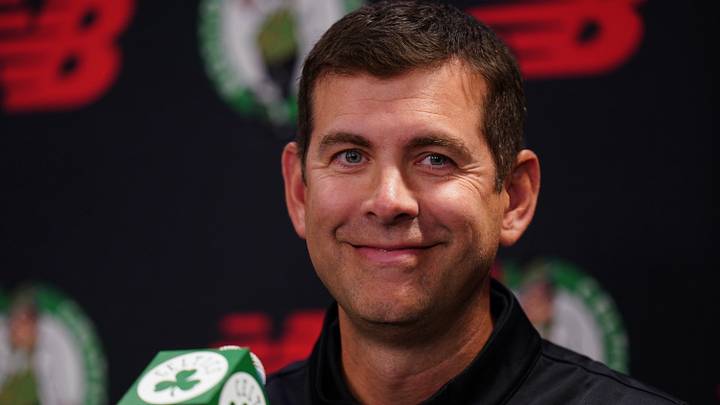
Fairly or not, the only thing that will likely be remembered from this Celtics offseason is the blockbuster trade that sent Jaylen Brown to Philadelphia. Whether that move works out or not remains to be seen, but either way, it’s overshadowing the fact that Brad Stevens and his team have worked wonders since last season ended.
The cherry on top came on Tuesday as the team agreed to a two-year, $44.2 million extension with Payton Pritchard, tacking on one guaranteed year in 2028-29 with a mutual option for the 2029-2030 season, keeping Pritchard in Boston on a value deal for at least the next three seasons.
This comes on the heels of two other bargain-bin extensions for young players the Celtics have developed: Jordan Walsh and Neemias Queta. Neemy broke out last season and was rewarded with a four-year, $56 million extension that begins next season, and Walsh, who emerged as a 3 & D menace, got a three-year, $15 million deal starting next season.
Stevens worked magic this offseason
That’s three important players, all major factors in the rotation, who will be around for the next few seasons on below-market deals. Beyond that, in free agency, they added one of the best big men on the market, Mitchell Robinson, using the mid-level exception, and grabbed an outstanding veteran in Mike Conley for a minimum contract.
It also looks like the Celtics grabbed two promising young prospects in the draft: an athletic 19-year-old big man, Chris Cenac Jr., late in the first round, and an outstanding defensive-minded wing, Dillon Mitchell, in the second round. They may not make an impact this season, but they’ve both shown exciting flashes in Summer League and preseason, and should be able to grow in the G League.
And then, with a no-risk flier, Boston added former lottery pick Devin Carter, who lit it up in his first preseason appearance and will likely slot into the team’s final two-way spot. In a vacuum, none of these moves are going to steal the spotlight, but this is how you crush the margins and set up an organization for sustainable success.
Celtics wouldn't be handing out these deals with Brown still in Boston
With all of these moves, it’s impossible to ignore that they largely wouldn’t have been possible without trading Brown. Freeing up his future salary created the flexibility to work out all of these extensions for the rest of the decade and to comfortably use the mid-level exception. They’ll be under the tax this season, but the extensions will start to kick in next year, and the payroll will go up over the next few years.
If Brown was extended through the rest of the 2020s, the Celtics would have been up against the aprons quickly, and there’s simply no way they would have been able to make these additions and keep the roster together. It was a steep price to pay and a tough pill to swallow, but Brad did what he believed was best for the team.
And if that wasn’t enough, the Celtics also got back Paul George and a couple of very enticing first-round picks. If the JB trade blows up, none of this will matter or be remembered, but if the team comes together the way that I and the Celtics’ brass think it will, this will go down as a masterful offseason for the front office.
 Add us as a preferred source on Google