

The Celtics love their traded player exceptions, and over the years, they’ve made great use of them, forcing fans to get on board and understand the value created. So, there was understandably some excitement when the team traded Anfernee Simons for Nikola Vucevic at the trade deadline, opening up a TPE worth almost $27.7 million.
That would allow the Celtics to make a trade and take back a player (or players) with a salary up to that $27.678 million without sending back matching salary in the deal. That’s a great weapon in the modern NBA when teams are starved for financial relief, and the ability to make an imbalance trade can be a great asset.
But unfortunately for the Celtics, it’s no longer that simple. When the team used the mid-level exception to sign Mitchell Robinson in free agency, they became hard-capped at the first apron, which sits at $209 million for the 2026-27 season. With the moves they’ve made, the Celtics’ payroll is right around $204 million, which means they can’t add more than $5 million in salary to the current roster for the coming season.
Boston is only about $4 million away from their first apron hard cap
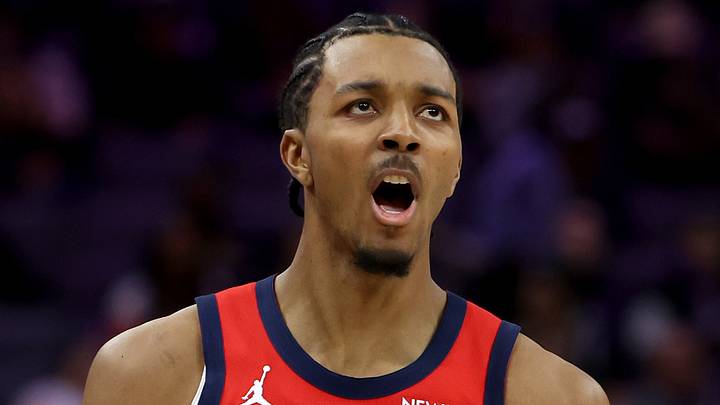
So, unless they make other moves to shed salary, Boston can’t simply absorb another big salary even using their TPE. For example, there have been lots of connections with the Celtics and Trey Murphy III of the Pelicans. Part of that was because Murphy’s $27 million contract for next season fits snugly into the TPE.
The problem is that doing a deal like that, using the TPE to absorb the money and sending draft capital to New Orleans, would put the Celtics way over the first apron, which they can no longer do. To take in Murphy’s contract, Boston would need to send out roughly $22 million, meaning they’d almost certainly have to flip Paul George or Derrick White.
That’s certainly a possibility, but it makes things a lot more difficult and confusing and removes much of the benefit of the TPE. It can still help them recoup solid value, and they can move Sam Hauser and his $10+ million contract, which would allow them to take on more like $15 million in salary, but still, the path to simply adding a player like Murphy or Cam Johnson without sending out a player from the rotation is all but dead.
Celtics should still try to avoid the luxury tax if possible
Furthermore, there’s still a very good chance the Celtics’ goal is to get under the luxury tax completely, which would require them getting their payroll down to about $201 million. That means somehow shedding a few more minimum salaries and likely doing some more cap gymnastics around the trade deadline, much like they did this season.
The benefit there would be resetting their repeater tax penalties for next year, which should give them the green light to spend freely next summer, possibly even going back into the second apron if they deem it worthwhile. If there’s a move that makes it worth being over the tax in 2026-27, I imagine they’ll do it, but if it’s possible to stay below the line, that would be massive for team-building going forward.
I won’t pretend to be as smart as Brad Stevens, Mike Zarren, and the rest of the front office, but if I had to guess, I would imagine the goal is to shed some money and duck the tax. If they want to make another big move, it’s likely to be flipping George and some picks for multiple players (maybe Murphy III and another salary like Jordan Poole). They can add in Hauser or someone else to send out more money and duck the tax, while technically absorbing Murphy with the TPE and creating another $27m TPE for another year.
Then, the team would accomplish multiple goals at once, and still create the luxury to go all-in next summer with lots of tradable salaries, contracts coming off the books, another big TPE, and lots of draft equity. It may be easier said than done, but I think this is the current plan for the Celtics.
 Add us as a preferred source on Google