

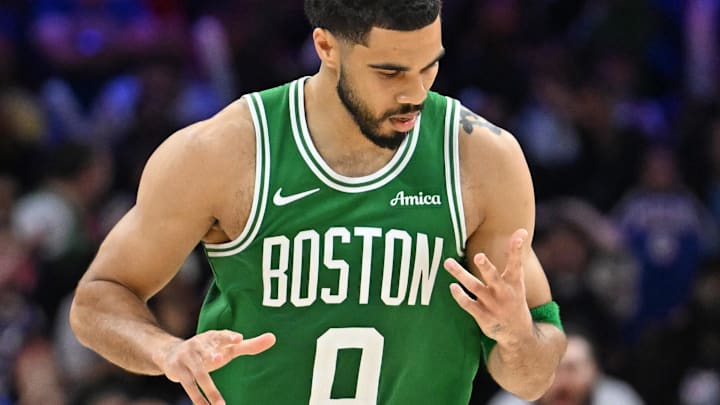
After the Celtics’ frustrating Game 2 loss at home to the Sixers, all we heard about was the shooting variance and the math game that Philly had flipped in their favor. The 76ers were red-hot, shooting 19-39 from three, while the Celtics couldn’t hit the broad side of a barn, putting up paltry 13-50 numbers from deep.
It was an outlier. It was a fluke. There was no reason to panic. Sure, that was the company line, but if we’re being rational and impartial, it does make sense.
So, obviously, everyone was watching on Friday night in a pivotal Game 3 to see how Boston would bounce back and if their shots would fall. And they did. And the Celtics won. They made 20 threes and knocked them down at a blazing, 43% clip en route to a 2-1 series lead. Philly was solid, but not spectacular, coming back down to earth and going 12-35.
That means everything is good, right? Make more threes, win the game. It seems simple. But, not so fast.
3-point math helps, but it’s not everything
While it was great to see the Celtics have a hot-shooting night, there are still some reasons for concern here. They made 20 threes on a good percentage, which is an ideal outcome. And yet, they only scored 108 points and had to gut this one out in the final seconds against a solid, but far from great, 76ers team.
We know the Celtics are a great three-point shooting team, and we know they’re not going to stop taking them, but that can’t define them. 20-47 is more likely than 13-50, but clearly, both results are in play.
The Celtics had lots of chances to win Game 2, even with their dreadful shooting. And in Game 3, even with their excellent shooting, the Sixers had lots of chances to steal this one. You can wake up, look at the box score, and think it’s really that simple: make threes: win, miss threes: lose. But there’s a lot more at play.
Celtics need a lot more than 3-point shooting to beat elite teams
The Celtics can ramp up and turn their defense into a brick wall. They can crash the glass and rebound as well as just about any team in the league. They were tops in the NBA at protecting the ball this season. Jaylen Brown and Jayson Tatum are the best pair of isolation scorers in the league. Derrick White and Payton Pritchard are guards who can puncture the paint. Neemias Queta has turned into a legitimate lob threat.
The point is, Boston has a lot of identities. They were a great team this season, and it was for reasons that go far beyond three-point shooting. That’s the low-hanging fruit, and it’s what a lot of casual fans and national pundits quickly point to, but it’s only one piece of the puzzle.
Maybe, in this series, three-point variance will be enough. But the Celtics have bigger aspirations than just winning a first-round series. The competition is quickly going to get a lot better, and the Celtics have to be prepared for off-shooting nights and teams to take away the three-ball.
They have plenty of other tools in their tool belt, and if they want to go on a long run, they are going to have to use all of them. They have the coaches and the personnel to make it happen, but it’s going to take a gargantuan team effort for two straight months. Making a lot of threes will certainly help them along the way, but it can’t be the only thing.
 Add us as a preferred source on Google