

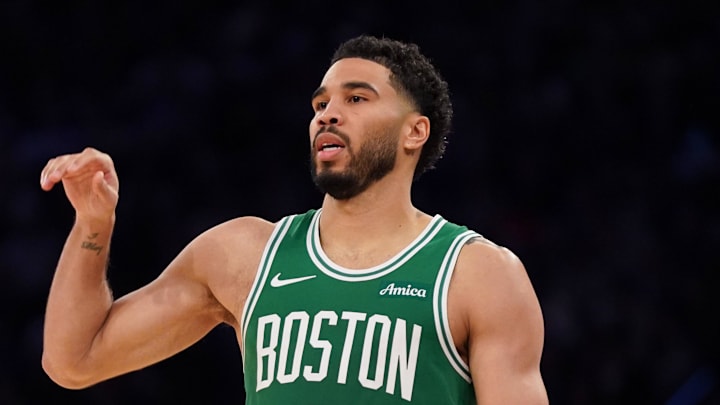
Several factors undermined the Boston Celtics in their Game 2 loss to the Philadelphia 76ers. One of them was the inability to find a rhythm from beyond the arc. It led to something that hasn't happened across the Association this season.
Despite repeatedly generating quality looks, the Celtics went 6/24 on wide-open three-point attempts. That means, despite at least six feet of separation from the closest defender, Boston had a conversion rate of just 25 percent when they created those opportunities, per NBA.com.
During the regular season, the C's knocked down 40.2 percent of those shots. No team made fewer than 35 percent of them. However, they have company in the sub-30 percent club in the first round of this year's playoffs. That includes the Sixers, who missed all 12 of their wide-open attempts in their 123-91 Game 1 loss.
The compounding effect of the Celtics' misses
Boston finished Tuesday's tilt 13/50 from beyond the arc. That's a success rate of just 26 percent. When that happens, it fuels transition opportunities. It can feed into the opposition's rhythm. Once that happens and they're repeatedly seeing shots go through the net, and their confidence is flowing, it becomes difficult to cut off their water.
"Yeah, it does put pressure from the sense of when you get into a possession game, and the possession game against a team like that with multiple shot-makers, it comes down to one of the ways you have to defend them is by offense," said Joe Mazzulla at the post-game podium while discussing how the missed shots made life more difficult for their defense. "I thought we got great looks, but we missed them. And you look at it, 91-89, they go on a run. We missed a lot of good shots. We don't get them. You have to be able to score [in] close games against a team like that. And they made more shots than us down the stretch."
And as the misses accumulate, it can creep into players' minds and impact, not just their shooting, but their overall rhythm and execution. Mentally, it requires blocking out the bricks, instead focusing on the next play, then continuing to shoot with confidence. Of course, that's easier said than done. The other truth is that it's a make-or-miss sport. There's only so much a team can do if it doesn't course correct.
The Celtics ran into that reality in Game 2 at TD Garden. A prime example occurred with the hosts trailing 91-89 with under six minutes to play. Jayson Tatum stepped into a clean look at a 3 from the left wing, only to see his shot draw iron. Tyrese Maxey buried a shot from behind the arc at the other end, as the 76ers closed the contest on a 20-8 run.
"When you're not hitting shots, that puts pressure on your defense, and that's what happened tonight," said Tatum after Boston's 111-97 loss.
Overcoming a shooting performance like that is a substantial challenge. The good news for the Celtics is that it hasn't happened at any other point this season. As long as lightning doesn't strike twice, if they continue to create quality shots, which their body of work suggests will happen, then they should regain control of this first-round rivalry clash.
 Add us as a preferred source on Google