

Last season was all about getting under the luxury tax for the Celtics. A task that seemed nearly impossible when the offseason began, but was ultimately accomplished in the final days of the regular season. Boston started by shedding big contracts in Kristaps Porzingis and Jrue Holiday, then slowly breaking down those pieces into smaller, less expensive pieces all the way to the trade deadline in February.
And at the deadline, the Celtics made a flurry of moves that left them just below the tax, and only with 12 players. Over the final months of the season, they managed 10-day contracts and salary cap gymnastics to tiptoe the line, finally signing their second-round rookies to standard contracts at the last possible moment.
The mission was accomplished. Barely. And now, Celtics fans must be getting PTSD hearing how the goal may well be to duck the luxury tax yet again, for a second straight season, to reset the repeater tax and kick off a massive new spending window next summer. And while this is largely true, fear not; the work is mostly done.
Celtics already under the luxury tax as things stand
As of today, the Celtics are under the tax and have 14 players on the roster with total salaries of $198.72 million. They could keep this team exactly intact without making a single move all season, and they’d be safely below the tax line, which is $200.43 million. They could also sign second-round rookie Dillon Mitchell to a standard contract, or wait for a pro-rated contract for a free agent or someone on the buyout market, for roughly $1.7 million.
The point is, the path to ducking the tax is infinitely simpler this season and should require a bunch of financial moves at any point. The Celtics can make a trade or add a free agent, but they’ll have to send out just about equal money to keep the payroll under the tax. It’s actually pretty straightforward and simple for a change.
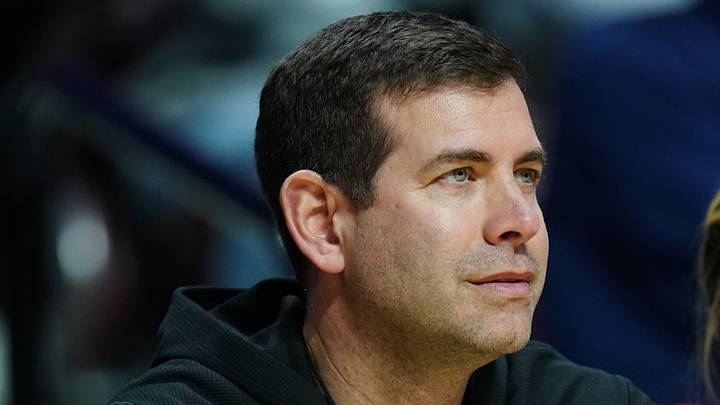
What happens if Brad Stevens decides to make a trade?
Now things get tricky if the Celtics do feel inclined to make changes to the roster before the end of the season. They can still take on more money, spending up to the first apron if they are so inclined. That would allow them to add about $9 million in salary before being hard-capped from the Mitchell Robinson signing, but then they wouldn’t reset the repeater tax.
Maybe that’s not the goal, but it would mean a very large tax bill that will only get larger in years to come. If there’s a move to be made that they simply cannot pass up, then obviously they should make it. But even then, it might be worthwhile to shed what it takes to get back under the tax before the deadline.
Either way, this should be much easier to follow this season. Whereas a year ago, the Celtics and Brad Stevens had their work cut out for them, now things have changed dramatically. Instead, the Celtics are able to sit back, knowing their work is done, and just wait for the chips to fall and things to come to them.
 Add us as a preferred source on Google