

Fans generally enjoy transactions more than seeing their favorite team stand pat. A 15th roster spot remaining vacant won't spark celebrations. Conversely, signing someone to fill that slot generates a buzz. It has the power to send a jolt of electricity through the dog days of the NBA offseason.
For example, what if the Boston Celtics had signed Russell Westbrook? It certainly would have created headlines. However, even before the future Hall of Famer retired, it was a potential disaster that Celtics fans never had to worry about.
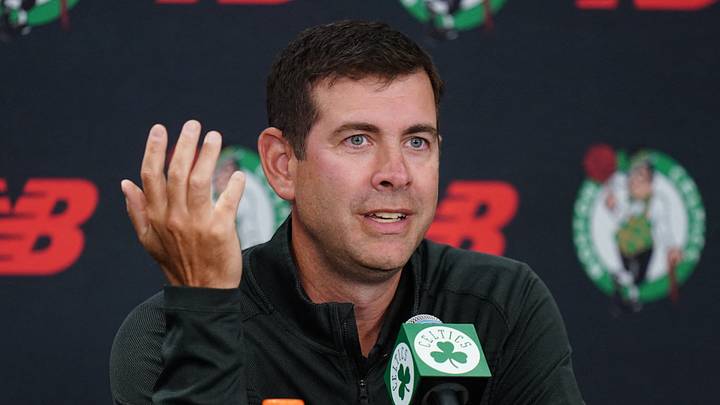
DeMar DeRozan is a recognizable figure still available in free agency. Yet Brad Stevens' most likely plan is to leave the team's final roster spot open -- for now at least.
Why? Because it's better to maintain flexibility. And for a franchise that's well-positioned to reset the repeater tax, it's smarter to preserve the space it has underneath the luxury tax threshold. Boston's just $1.7 million below that line. It's unlikely that there's a player out there who's worth eating into some of that space, let alone pushing them into a tax bracket they're better off avoiding.
A careful consideration for the Celtics' final roster spot
It's important to understand that the primary incentive to reset the repeater tax isn't financial. Anyone will appreciate saving money. However, this franchise's north star has always been the Larry O'Brien Trophy.
This more punitive collective bargaining agreement is designed to promote parity. Boston got out in front of it by pushing its chips into the middle of the table. The Celtics went over the second apron the first two years this CBA was introduced. The full effects of it hadn't yet taken effect. It was an aggressive approach that helped produce Banner 18.
Then, they had no choice but to scale down. From access to exceptions to keeping a team together, and trade and draft-pick restrictions, the path to their next championship is best served by resetting the repeater tax.
The one deal-breaker for any potential Celtics signing
The NBA's original monarchy rightfully places a premium on its culture. They work diligently to continue to cultivate it.
So, when considering whether they will or they should acquire someone, one must ask: Will that individual buy into the available role?
Mike drop ☘️
— Boston Celtics (@celtics) July 7, 2026
Welcome to the Celtics, @mconley11 pic.twitter.com/aThumt4aSI
Mike Conley was a better bet to do so than Westbrook. Boston moved quickly to sign the former in free agency. The latter didn't retire because he had no offers; he walked away because he seemingly couldn't find the opportunity he wanted.
Westbrook also wasn't a good fit in the Celtics' system. His shooting struggles and high turnover rate -- he averaged 3.3 per game last season -- are at the heart of that.
And while this could have been the year Bradley Beal finally joined forces with close friend Jayson Tatum, that wasn't meant to be. The reason? Any minutes that could go to Beal are better off invested in the development of Boston's burgeoning wings.
DeRozan donning green would also simultaneously provide players like Hugo Gonzalez, Jordan Walsh, Baylor Scheierman, and Ron Harper Jr. with a veteran mentor and someone who's cutting into their time on the court. The latter is more valuable. As the cliché goes, experience is the best teacher.
Whether it's now, at training camp, or during the season -- when they could convert Dillon Mitchell from a two-way deal to a standard contract -- if there's an opportunity worth acting on, they will. However, for now, it's in the Celtics' best interest to keep their 15th roster spot open. It's not sexy, but the savviest moves typically aren't aiming for that.
 Add us as a preferred source on Google