

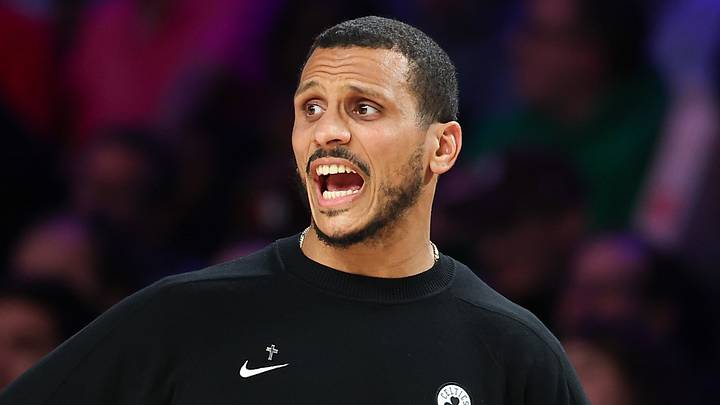
Sunday at the Chase Center, the Golden State Warriors bested the Boston Celtics, 88-87. It's their fourth straight loss. That hasn't happened since the 2020-21 season. It's the first time it has happened in the Joe Mazzulla era.
Their first-shot defense has been very good. They started the year doing well at limiting teams to only one look. However, they've since struggled to keep opponents from extending possessions.
Their 67.1 percent defensive rebounding percentage ranks 19th in the league, per NBA.com. In the final frame, they are 28th in that category, securing just 63.4 percent of the available defensive rebounds.
Celtics' rebounding woes undermine them in loss to Warriors
Those issues on the defensive glass were on full display against Golden State. The hosts were without Stephen Curry. However, despite not even reaching 90, they held on for a one-point victory.
One key reason was that they grabbed 19 offensive rebounds, including five in the fourth quarter. They parlayed those into 22 second-chance points in Sunday's win. There would likely be less noise about this if the visitors had converted more of their extended possessions into points, thus changing the outcome. They snagged 15 offensive rebounds. However, they only turned those into 13 points.
The Warriors entered the evening averaging 12.9 offensive rebounds, tied for the seventh-most in the Association. They now rank sixth. Even their new output of 13.3 per game is appreciably below their production against Boston.
The Celtics pride themselves on winning the most important game within the game: the possession battle. That victory on the margins helped them start the year 11-2. It's now a problem they need to address.
2 factors in the Celtics' struggles on the defensive glass
One is fatigue. Their November schedule has been brutal. Almost every night they're either playing, flying to a new state, or both. Yes, the plane is private, the hotel is luxurious, and the labor could be far more demanding than a basketball game. However, it's still exhausting.
The real counterpoint to that is that this team is overloaded with depth. The young wings are suppressing each other's minutes. Chris Cenac Jr. looks like someone they need to find playing time for, and Mike Conley was a bright spot in Boston's last two tilts.
However, even that argument doesn't hold much weight. Joe Mazzulla has leaned on his depth. Players have gotten games off, especially during a back-to-back. It's more about the group seeming fatigued than an individual running on empty or close to it. Even with individuals paced properly, playing this frequently drains the gas tank.
Secondly, there is a compounding effect to cold shooting. The Celtics shot below 40 percent from the field. That includes faring 14/47 (29.8 percent) from beyond the arc. When you're not shooting well, it can impact confidence and rhythm. It can lead to being a step slow on the glass and in other parts of the game. Everything is connected.
Boston has a lot to figure out. Tuesday's NBA Cup contest against the Washington Wizards is the next opportunity to get back on track. The Celtics taking care of business on the defensive glass would go a long way toward snapping their losing streak.
 Add us as a preferred source on Google