

When the NBA’s new CBA came into effect and changed team-building, the idea was to scare teams off with aprons, taxes, and penalties, and for the most part, it seems to be working. We’ve reached a wild age of parity within the league, and championship cores are being broken up at an alarming rate.
Adam Silver and company clearly wanted to replicate the NFL in some ways, and one (perhaps) unintended consequence has been an increased value on rookie-scale contracts. This is something that has been seen in the NFL in recent years as teams have a short window with an elite young quarterback on a rookie deal where they can build a juggernaut before they have to pay him.
And now, to an extent, we are seeing something similar in the NBA. Teams have to be as savvy as ever because as players age into their primes, their salaries go through the roof and make it nearly impossible to build a competitive team around them.
We just saw it happen to the Celtics last summer when they traded away Jrue Holiday and Kristaps Porzingis to cut their tax bill and get under the second apron, but they ripped apart the 2024 title-winning roster in the process.
Celtics’ young, cheap players can be a massive advantage
Obviously, it’s still a star-driven league, and teams need top-tier talent to win, but the key is finding cheap role players or budding stars on value contracts to fill out the roster. Luckily, Boston has that in spades, but they need to lean in and trust it even more.
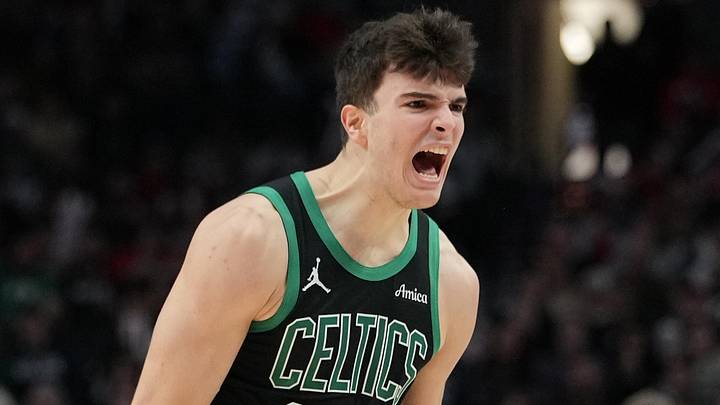
Next season, the Celtics will have Baylor Scheierman, Hugo Gonzalez, Ron Harper Jr., Luka Garza, Neemias Queta, and Jordan Walsh all on rookie or minimum contracts (Walsh and Neemy have team options). That’s roughly $16 million in total salary going to six players who should all factor into the rotation, a massive advantage for the Celtics.
If they leverage that value and maximize those players (not to mention Payton Pritchard making just $7.7 million), they can easily afford the two supermax superstars in Jayson Tatum and Jaylen Brown, plus the complementary third star in Derrick White, and have money to spend. Brad Stevens will still have over $40 million in traded player exceptions to play with and the full midlevel exception and bi-annual exception for free agents.
If they use all the tools at their disposal, the Celtics should be able to come back next season with one of the strongest rosters in the league, and a big part of that is because of all the production they can get from young players on cheap contracts.
 Add us as a preferred source on Google