

Tanking is a problem pervasive in the NBA. It has undermined the intergrity of the league. It is often blatant; a message, one that's most insulting to those who bought tickets, that a team is trying to lose.
The Utah Jazz are a prime example. They received a $500,000 fine from the NBA for tanking. The league levied that penalty after the Jazz removed their best players before the final frame of multiple matchups.
Bez Mbeng, who was with the club on 10-day contracts before recently signing a two-year contract, played all 48 minutes in Tuesday's 156-137 loss to the New Orleans Pelicans. That dropped Utah to 21-59. They share the fourth-worst record in the Association with the Sacramento Kings.
The Jazz are far from alone when it comes to tanking. The Milwaukee Bucks, who the NBA is investigating for holding out two-time MVP Giannis Antetokounmpo, a frustrated star who says he's healthy and wants to play, are another one of the many examples of a problem plaguing the league.
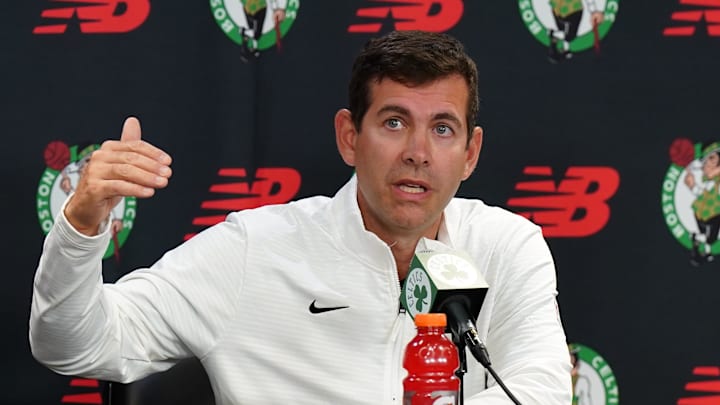
Speaking before Tuesday's tilt between the Boston Celtics and Charlotte Hornets, Brad Stevens offered guidance on the direction the NBA should go in as it searches for solutions to tanking.
Brad Stevens when asked about the NBA addressing concerns about tanking:
— Bobby Krivitsky (@BobbyKrivitsky) April 7, 2026
“I’m a huge proponent of every night being as competitive as humanly possible.” pic.twitter.com/iAtOxyMO0D
"I'm a huge proponent of doing everything that we can to make sure that every night is as competitive as humanly possible, because we have the best players in the world, and I think that it's important to let them be that on that stage," said Stevens before the Celtics' 113-102 win over the Hornets. "There are a lot of discussions going on about how to best focus on that, both in the near term and the long term. And maybe there is a near-term solution that is a stopgap before a longer-term solution, when people have more time to really think about and break it down.
"But from my own perspective, I think it's really important that, because we, and we're about to embark on these playoffs, and there's nothing like that. There's nothing like the competitiveness and the energy and the talent that you see on the court in these playoffs, and the more that we can get every game to be incredibly meaningful to every team is really important, in my opinion."
The NBA can't compromise its product
The reality is that struggling franchises, whether in the midst of a down season or an experience they've been living with longer, are incentivized to tank. Their best path to becoming competitive, especially when it comes to one day entering the championship picture, is to hope that the ping pong balls bounce them a top pick who turns into a star.
That's not to say it will work. The Sacramento Kings perennially picked towards the top of the draft and repeatedly had nothing to show for it. An organization that fixates on tanking must also figure out how to build a winning culture. They must lay the foundation for future success. That's a difficult duality to navigate. Many franchises fail to do so.
The NBA often feels like a league of haves and have-nots. It's the one where, save for a handful of prominent teams, it's the most challenging to acquire a superstar. Unfortunately for those who aren't members of that exclusive club of desirable destinations, it's also the most star-driven league.
That's why, for the sake of parody and extending hope to franchises and fan bases across the Association, those who aren't blessed to reside in places like South Beach and Hollywood should get some help. It doesn't benefit the NBA to have organizations stuck at the bottom, watching it become even more difficult to dig out as the lottery odds change.
At this year's MIT Sloan Sports Analytics Conference, Adam Silver stated that the NBA will make "substantial changes" to its draft lottery by next season. As the league works to address tanking, Silver even mentioned the possibility of detaching team records from the draft order. However, he also labeled himself an "incrementalist." It seemed more like a proposal intended to illustrate the lengths the NBA will go to solve this as best as possible.
Whatever solutions the league lands on, it's important that teams at the bottom don't suddenly have even less hope of rising in the standings. However, as Stevens stated, it's paramount that these changes make the regular season more competitive and incentivize teams to win and scale up, rather than pulling some of the stunts that embarrass the NBA and undermine its integrity.
 Add us as a preferred source on Google